
Secondhand shopping has quietly become one of the smartest money moves a family can make. The thrifting world has expanded dramatically, from neighborhood charity shops to massive online resale platforms, and the quality and variety of what you can find has never been better. Whether you’re a committed thrifter or just starting to explore, this guide covers everything you need to know to shop secondhand like a pro and build a wardrobe, home, and lifestyle at a fraction of retail cost. Everything in this guide focuses on secondhand shopping thrifting families, giving you practical, actionable advice you can use right away.
Understanding Secondhand Shopping Thrifting Families: Tips Every Parent Can Use
Why Secondhand Shopping Makes Financial Sense
The math on secondhand shopping is straightforward: most consumer goods are available secondhand at 20-80% below retail price, often with years of useful life remaining. For a family that shops secondhand for even half of what they buy, the annual savings easily reach into the thousands. Beyond the savings, you can afford quality brands secondhand that you couldn’t justify at retail, and for categories like children’s clothing, where items are outgrown before they’re worn out, secondhand is often the only approach that makes financial sense.
Secondhand shopping thrifting families is a topic that deserves thoughtful attention from every family, regardless of their current situation. When it comes to secondhand shopping thrifting families, small consistent actions tend to produce better long-term results than occasional bursts of effort. Most families find that investing time in understanding secondhand shopping thrifting families pays off in ways that extend well beyond the immediate benefit.
The Best Places to Shop Secondhand
Local Thrift Stores
Goodwill, Salvation Army, Savers/Value Village, and local charity thrift shops are the classic entry point to secondhand shopping. Quality varies significantly by location, stores in higher-income zip codes tend to receive higher-quality donations. Most chain thrift stores use a color-tag rotation system where items of a certain color are additionally discounted. Learn your local store’s rotation so you know when items will drop further. Many stores also run weekly discount days that experienced shoppers plan around.
Consignment Shops
Consignment shops accept items directly from sellers, split the revenue, and typically carry higher-quality and better-curated inventory than charity thrift stores. For children’s resale specifically, chains like Once Upon a Child specialize in kids’ clothing, toys, and gear and offer genuinely good value. They also pay cash on the spot for items they accept, useful when you’re clearing out clothes your kids have outgrown.
Facebook Marketplace
Facebook Marketplace has become one of the best places to find secondhand furniture, appliances, baby gear, sports equipment, and household items locally. You can search for exactly what you want, see photos and descriptions before going, and often negotiate the price. For furniture especially, Marketplace has transformed the secondhand buying experience, you can furnish a home with quality pieces at a tiny fraction of retail cost.
Buy Nothing Groups
Buy Nothing groups operate on Facebook and through the Buy Nothing app as neighborhood gifting networks, everything is free. Members post things they want to give away, and other members can request them. The quality and variety is remarkable, people give away furniture, appliances, clothing, books, toys, and more. For families willing to engage regularly with their local group, Buy Nothing can supply a significant portion of what they would otherwise buy.
Online Resale Platforms
The explosion of online resale platforms has made secondhand accessible for everything:
- thredUP: Large online consignment store for women’s and kids’ clothing. Great search functionality, quality grades items before listing.
- Poshmark: Peer-to-peer clothing and accessories marketplace. Good for finding specific brands and styles; negotiate directly with sellers.
- eBay: Still excellent for electronics, collectibles, vintage items, and anything with a specific model number.
- Mercari: Similar to Poshmark but broader categories, good for electronics, housewares, and clothing.
- Kidizen: Specifically for children’s clothing and gear.
- ThriftBooks: Massive online inventory of used books at very low prices with flat-rate shipping.
Estate Sales and Garage Sales
Estate sales offer some of the best prices on furniture, kitchenware, collectibles, and vintage items, everything is priced to sell quickly. EstateSales.net and EstateSales.org list local sales. Garage sales are more variable but regularly surface exceptional finds for children’s items and books. Early morning gives you best selection; late in the day gives you best prices.
How to Thrift Effectively
Go With a List, Not Just Openness
The best thrifters combine openness to unexpected finds with a specific list of items they’re actively looking for. Keep a running list of what you need, a winter coat in a specific size, a cast iron skillet, a certain toy, a bookshelf. When you know what you’re looking for, you recognize it when you find it. Without a list, you’re just browsing, and browsing leads to buying things that aren’t quite right.
Know Your Brands
Experienced thrifters know which brands hold up over time. Knowing that a Land’s End coat or Patagonia fleece or Le Creuset pot is worth buying secondhand at a higher secondhand price (because it lasts decades) is valuable knowledge. Knowing that fast fashion brands aren’t worth secondhand prices because they’ll fall apart anyway saves you from bad purchases.
Check Items Carefully Before Buying
Always inspect secondhand items thoroughly. For clothing: check seams, zippers, buttons, stains, and fabric integrity. For furniture: check joints for sturdiness, look for water damage or structural issues, open drawers and test doors. For electronics: test before buying when possible. For children’s gear: check CPSC.gov for recalls on any used child safety product.
Shop Regularly for the Best Finds
Thrift store inventory turns over constantly. The shoppers who find the best things visit regularly. A 20-minute browse once a week, with a focused eye on your current needs, surfaces far more finds than an occasional big trip. Good items appear on random Tuesdays and are gone by Friday.
Set Up Saved Searches Online
On eBay, thredUP, Poshmark, and Facebook Marketplace, you can save searches for specific items and receive notifications when matching listings appear. If you want a specific cast iron pan, a Patagonia vest in a certain size, or a particular toy, save the search and wait, it will appear eventually, often at an excellent price.
The Best Categories to Buy Secondhand
Children’s Clothing and Gear
This is where secondhand shopping delivers the most consistent value for families. Kids grow fast, outgrow things before wearing them out, and children’s items at thrift stores are usually in great condition because of how briefly they were used. Buying children’s clothing and gear secondhand is one of the highest-impact financial decisions a family can make.
Adult Clothing and Accessories
Quality clothing bought secondhand can be a genuinely better investment than cheap clothing bought new. A well-made secondhand blazer at $15 will outlast a $25 fast fashion blazer. Focus secondhand clothing shopping on quality basics and workwear, where durability matters most.
Furniture
Secondhand furniture is one of the best values in all of thrifting. Solid wood furniture bought secondhand is often higher quality than newly manufactured furniture at the same price point, because older manufacturing standards were higher. Facebook Marketplace, estate sales, and Craigslist are the best sources. Be selective about condition, but know that minor cosmetic issues can be addressed inexpensively.
Kitchen Equipment
Cast iron, baking dishes, KitchenAid mixers, Vitamix blenders, quality knives, and most kitchen tools are excellent secondhand buys. These items last decades, are easy to sanitize, and appear regularly in thrift stores. Thrift stores are genuinely the best place to find a quality cast iron pan for $5-$15 that would cost $50+ new.
Books, Toys, and Games
Books, board games, and toys are almost always available secondhand in great condition at a fraction of retail. Most toys are used briefly and donated before being worn out. Check that all board game pieces are present before buying. ThriftBooks.com offers a massive inventory of used books for $3-$6 with flat shipping.
What Not to Buy Secondhand
- Car seats: Never buy used, you can’t know if it’s been in an accident or passed its expiration date
- Crib mattresses: Safety research links used mattresses to increased SIDS risk
- Helmets: Single-impact items where internal damage is invisible
- Swimwear and underwear: Hygiene items; always buy new
- Recalled products: Check CPSC.gov for any safety product you’re considering used
- Electronics with no ability to test: Only buy used electronics where you can verify function
Selling What You Don’t Need: The Other Side of the Equation
The families who get the most out of the secondhand economy aren’t just buyers: they’re sellers too. Selling items your family has outgrown creates income that funds the things you do need.
Facebook Marketplace is easiest for furniture and large items locally, free to list, no fees, buyers come to you. Poshmark and thredUP are best for clothing. eBay is best for collectibles, specific brands, and anything with known demand. Once Upon a Child pays cash immediately for children’s clothing they accept, lower payout than selling yourself, but zero effort and instant cash.
Related Guides
- How to Save Money on Clothing for the Whole Family
- How to Build a Capsule Wardrobe on a Budget: The Complete Guide
- Couponing for Beginners: The Modern Guide to Saving on Groceries and More For independent buying advice, Consumer Reports shopping guides is an excellent free resource families can rely on.
>
Frequently Asked Questions
For most categories, significantly yes. Families that buy children’s clothing, furniture, books, toys, and household goods secondhand consistently spend 30-70% less on these categories. Over a year, the savings are substantial. The time investment is real but manageable with online platforms that let you search from home.
The best app depends on the category. Facebook Marketplace wins for furniture and large local items. thredUP is best for browsing large clothing inventory by size and brand. Poshmark is best for fashion-focused shoppers. eBay is best for specific items with known model numbers. For free items, the Buy Nothing app is unmatched.
Shop with a list of items you’re actively looking for. Visit regularly, good inventory arrives constantly and moves fast. Know which brands are worth buying used. Shop multiple stores in your area and identify which has the best inventory in the categories you care about. Check items carefully before buying. Learn your store’s markdown schedule to catch items at their lowest price.
The Bottom Line
Secondhand shopping isn’t about deprivation: it’s about getting more for less and finding things you genuinely love at prices that make sense. The families who do it well have built a habit out of it: they know their stores, they shop with lists, they sell what they no longer need, and they think about secondhand as the first option rather than the last resort. The savings compound over time, and the satisfaction of finding exactly what you wanted at a fraction of retail price is genuinely addictive in the best way.
For more ways to take control of your family finances, see our complete guide to stopping overspending.
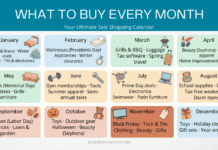
Before you shop, check our complete monthly shopping calendar to time your purchases for the lowest prices.
Image disclosure: Images in this post are AI-generated and used for illustrative purposes only. They do not depict real people or events. See our full AI disclosure policy.