Amazon Prime costs $139 per year (or $14.99/month), and for some households it’s one of the best value subscriptions available. For others, it’s a cleverly marketed service they’re paying for but barely using. Whether Prime is worth it for your family depends on how you actually shop and what you’d genuinely use, not what Amazon’s marketing would like you to believe you’ll use. This guide breaks it all down so you can decide honestly. Everything in this guide focuses on amazon prime worth honest, giving you practical, actionable advice you can use right away.
Amazon Prime Worth Honest: A Practical Guide for Families
What Amazon Prime Actually Includes
Most people sign up for Prime for the free two-day shipping, but the membership includes significantly more:
- Free two-day shipping on millions of eligible items (same-day and one-day delivery in many markets)
- Prime Video: streaming movies and TV shows, including Prime Originals
- Prime Music: ad-free streaming of a limited catalog (the full catalog requires Amazon Music Unlimited, which costs extra)
- Prime Reading: access to a rotating selection of Kindle ebooks
- Amazon Photos: unlimited cloud storage for photos
- Prime Gaming: monthly free games and in-game content
- Amazon Fresh grocery delivery: free delivery on orders $35+ (in supported areas)
- Whole Foods Market discounts: exclusive deals at Whole Foods for Prime members
- Early access to Lightning Deals: 30 minutes before the general public
- Prime Day access: exclusive access to Amazon’s annual sale event
- Amazon Pharmacy discounts: savings on generic medications
On paper, that’s an impressive list. The question is which of these you’d actually use.
Who Gets Real Value From Amazon Prime
Frequent Amazon Shoppers
If you place 15+ Amazon orders per year, the shipping savings alone likely justify the membership. Standard shipping on Amazon for non-Prime members is $5.99+ per order or free on orders over $35. On 20 orders per year that would have cost $5.99 each, you’re saving $120 just on shipping, close to the full membership cost. If you currently pay for individual shipping or avoid small orders because of shipping fees, Prime math often works in your favor.
Families Who Use Prime Video
Prime Video has genuinely good content and is one of the more competitive streaming services. If your family watches Prime Video regularly, it provides real value that offsets the membership cost. Compared to Netflix at $15-$23/month or Hulu at $7-$18/month, Prime Video at an effective $11.58/month (if the full membership cost is attributed entirely to video) is competitive, and shipping and other benefits are then essentially free.
Households With Young Children
Families with babies and young children often find Prime particularly valuable because they order frequently (diapers, formula, wipes, clothing their children are constantly growing out of), they benefit from fast delivery when they run out of something essential, and they use Prime Video for children’s programming. The combination of all three often makes the math decisive.
People Who Shop at Whole Foods
If Whole Foods is part of your grocery routine, Prime discounts there (typically 10% off sale items and exclusive discounts) can add up to meaningful savings over the year, sometimes enough to offset a significant portion of the membership cost on their own.
Who Might Not Need Amazon Prime
Infrequent Amazon Shoppers
If you order from Amazon fewer than 10-12 times per year, or if most of your orders are over $35 (and would qualify for free standard shipping anyway), the shipping savings may not justify the membership cost. Calculate your actual shipping savings from the last year and compare to $139.
People Who Don’t Use Prime Video
If you have Netflix and are satisfied with it and don’t watch Prime Video, you’re paying for a streaming service you don’t use. That’s fine if the shipping and other benefits justify the cost independently, but it’s worth being honest about what you actually use.
Deal-Seekers Who Shop Elsewhere
Amazon isn’t always the cheapest option. If you regularly comparison shop and find better prices at Target, Walmart, Costco, or specialty retailers, you might not be shopping at Amazon as much as you think. The convenience of Prime is only valuable if you’re using it, and if better prices elsewhere are pulling your purchases away from Amazon anyway, Prime may not be earning its cost.
How to Get More Value From Your Prime Membership
Actually Use Prime Video
Most Prime members underuse Prime Video. Browse the catalog before signing up for another streaming subscription. Prime has a strong library of original content, major studio films, and children’s programming. If you’re paying for both Netflix and Prime, evaluate whether you need both or whether one covers most of what you actually watch.
Use Amazon Photos for Free Storage
Unlimited photo storage is included with Prime. If you’re currently paying for Google Photos storage or Apple iCloud storage for photos, you may be able to eliminate that expense by using Amazon Photos, potentially saving $10-$30 per year.
Use Subscribe & Save for Household Staples
Prime members get up to 15% off on Subscribe & Save orders (typically 5% on one item, 15% when subscribed to five or more items per delivery). For household staples you buy regularly, paper products, diapers, wipes, cleaning supplies, coffee, pet food, Subscribe & Save can create meaningful savings on things you were going to buy anyway. You can pause or cancel subscriptions anytime without penalty.
Shop Prime Day Strategically
Amazon Prime Day (typically in July, with a fall version in October) is genuinely one of the better sale events of the year, particularly for electronics, Amazon devices, and household goods. If you’re a Prime member, plan purchases of higher-ticket items around Prime Day. Watch prices in advance using CamelCamelCamel so you can recognize genuine deals versus inflated “original prices.”
Share With Family Members
Amazon Household lets you share Prime benefits with one other adult (plus up to four teens and four children) in your household. If you and your partner both have separate Prime memberships, you’re paying twice for what you could share at half the cost. Consolidate to one household Prime account.
Amazon Prime Alternatives Worth Knowing
Walmart+
Walmart+ costs $98/year (or $12.95/month) and includes free delivery from Walmart stores, free shipping on Walmart.com with no minimum, a Paramount+ subscription, mobile scan-and-go checkout, and fuel discounts at Walmart and Murphy gas stations. For families who shop at Walmart regularly and value fuel discounts, Walmart+ can provide comparable or better value to Prime at a lower price.
Target Circle 360
Target’s paid membership tier offers free same-day delivery, free two-day shipping with no minimum, and early access to sales. For Target-focused shoppers, this can be more valuable than Prime depending on where you actually shop most.
Costco Membership
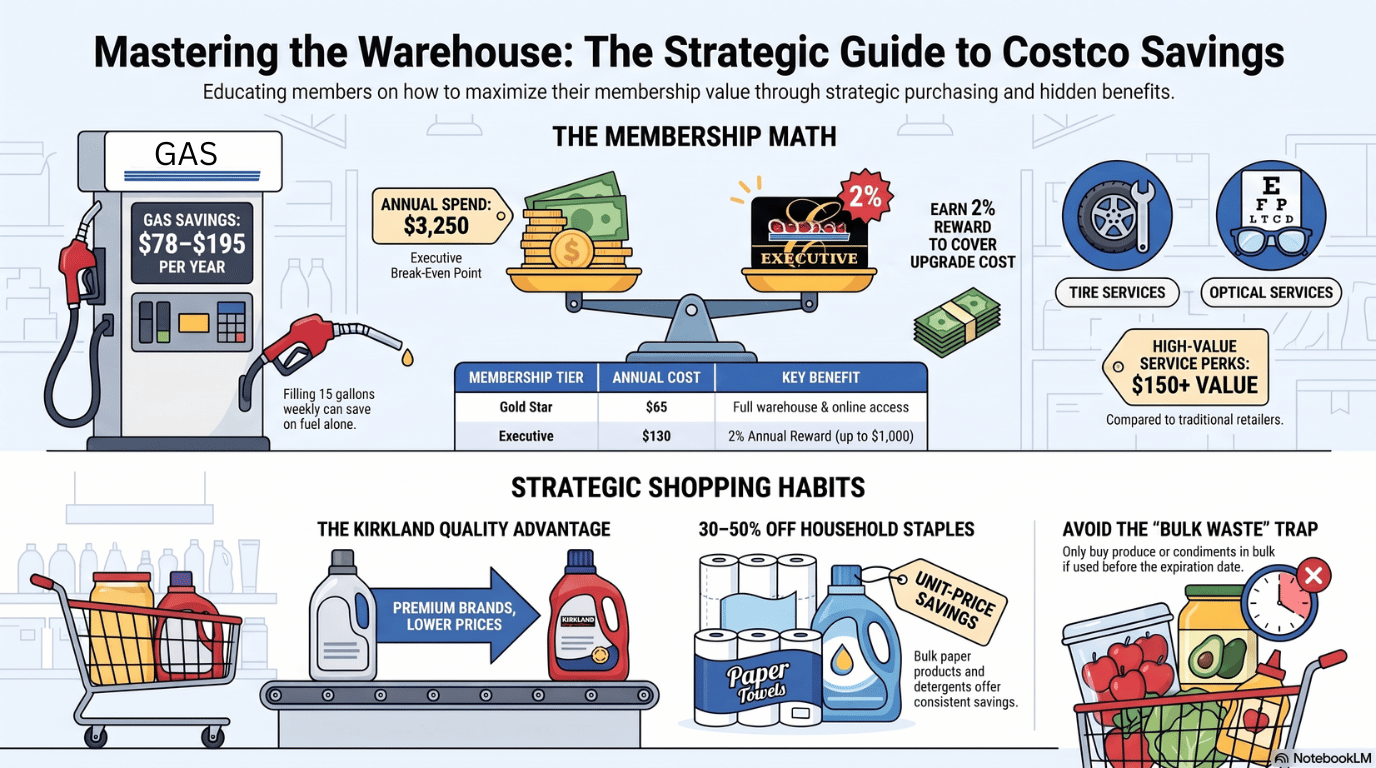
A Costco Gold Star membership ($65/year) provides access to warehouse prices on bulk household goods, groceries, electronics, appliances, and more, plus gas, pharmacy, and optical discounts. Families who stock up on groceries and household items regularly at Costco typically save far more than the membership cost. This is a different value proposition than Prime, warehouse shopping vs. home delivery, but for many families Costco delivers more per dollar.
The Honest Prime Value Test
Here’s a quick way to assess Prime’s value for your household: look at your Amazon order history for the past 12 months. Count your orders. Estimate what you would have paid in shipping on non-$35+ orders. Add the value of Prime Video if you watch it regularly (compare to what an equivalent streaming service would cost). Add any Whole Foods savings or Subscribe & Save savings you’ve generated.
If the total is materially above $139, Prime is worth it. If it’s below $139, you’re subsidizing Amazon’s infrastructure with benefits you’re not using.
Related Guides
- The Complete Amazon Shopping Guide for Families: Prime, Subscribe & Save, and Deals
- The Best Money-Saving Apps and Browser Extensions for Families
- How to Save Money at Walmart: The Complete Savings Guide For independent buying advice, Consumer Reports shopping guides is an excellent free resource families can rely on.
>
Frequently Asked Questions
For most families with children who shop on Amazon regularly and watch streaming content, yes. Families who order frequently (15+ times per year), have young children requiring regular supply purchases, and use Prime Video consistently almost always find the membership worth its cost. Families who shop Amazon occasionally and don’t use Prime Video should calculate their specific usage to determine whether shipping savings alone justify $139.
The annual membership ($139) is cheaper than paying monthly ($14.99/month = $179.88/year). If you plan to stay a Prime member for a full year, pay annually and save $40.88. Pay monthly only if you’re trialing membership or have specific periods of high Amazon usage and plan to cancel afterward.
Yes. Amazon Household allows you to share Prime benefits with one other adult in your household, plus up to four teens and four children. All household members get free two-day shipping, Prime Video access, and other Prime benefits under the same membership. Each adult can also share their payment methods selectively. This makes the per-person cost of Prime very reasonable for families.
Walmart+ is the most direct competitor and is cheaper ($98/year vs. $139). It includes free grocery delivery from Walmart stores, free shipping on Walmart.com, a Paramount+ subscription, and fuel discounts. For families who shop Walmart regularly and value fuel savings, Walmart+ can match or exceed Prime’s value at a lower cost. Costco ($65/year) is the best alternative for families focused on saving on bulk groceries and household goods.
The Bottom Line
Amazon Prime is worth it for the right household, one that shops Amazon frequently, values streaming content, and will actually use what it offers. It’s not worth it for households that don’t shop Amazon often, are already satisfied with other streaming services, and wouldn’t realistically use the other benefits. The key is honest self-assessment rather than optimistic projection about what you’ll use. Look at what you’ve actually done in the last year, not what you plan to do next year. That data tells you what Prime is actually worth to your family.
For more ways to take control of your family finances, see our complete guide to stopping overspending.
Before you shop, check our complete monthly shopping calendar to time your purchases for the lowest prices.
Image disclosure: Images in this post are AI-generated and used for illustrative purposes only. They do not depict real people or events. See our full AI disclosure policy.