
Black Friday is simultaneously the best and worst shopping day of the year. Best, because genuine deals do exist, especially on electronics, appliances, and toys. Worst, because it’s also the most aggressively marketed shopping event in American retail, filled with fake discounts, manufactured urgency, and products that were priced high specifically to be “discounted.” The shopper who wins Black Friday isn’t the one who buys the most. It’s the one who buys strategically. Everything in this guide focuses on win black friday, giving you practical, actionable advice you can use right away.
Win Black Friday: A Practical Guide for Families
Does Black Friday Actually Have the Best Deals?
Sometimes. The honest answer is that Black Friday deals are real in some categories and completely manufactured in others. Research by price-tracking services consistently shows that:
Win black friday is a topic that deserves thoughtful attention from every family, regardless of their current situation. When it comes to win black friday, small consistent actions tend to produce better long-term results than occasional bursts of effort. Most families find that investing time in understanding win black friday pays off in ways that extend well beyond the immediate benefit. The fundamentals of win black friday are more accessible than many people assume, the key is starting with clear priorities.
Approaching win black friday with intention and a practical mindset makes the whole process significantly more manageable.
- TVs and electronics: Black Friday genuinely offers some of the best annual pricing. Retailers and manufacturers coordinate to release specific models at specific prices during this window.
- Major appliances: Good deals exist, though sales in March and September sometimes match or beat them.
- Toys: Solid deals on specific toys, especially in the weeks leading up to Christmas.
- Clothing and fashion: Deals are often comparable to other sale periods throughout the year, not uniquely good.
- Small kitchen appliances: Real deals exist, especially on specific models retailers discount annually.
- Amazon devices: Amazon consistently offers deep discounts on Kindle, Echo, and Fire products.
The categories where deals are weakest: jewelry, beauty, and “limited quantity” items that are really just standard clearance dressed up as special deals.
Before Black Friday: The Preparation That Separates Winners from Overspenders
Make Your List Before You See Any Ads
This is the most important step. Before you see a single Black Friday ad, make a list of specific items you genuinely planned to buy. Be specific: not “a TV” but “a 65-inch 4K TV.” Not “something for the kids” but “specific toy X that my daughter has asked for.”
Your list is your defense. If it’s not on the list, it doesn’t matter how good the deal is. The deal that gets you on the thing you were already going to buy: that’s a win. The deal that convinces you to buy something you weren’t planning on: that’s marketing working exactly as intended.
Track Prices Before November
For anything on your list, start tracking the price in September or October. Tools like CamelCamelCamel (for Amazon), Honey, and Google Shopping let you see historical pricing. When you know that the TV you want has sold for $499 for the last 6 months, and a retailer is claiming a Black Friday price of $479, you know exactly what you’re actually saving.
You’ll often discover that the “deal” is the normal price. You’ll also sometimes discover that Black Friday genuinely has the lowest price the item has seen all year, and those are the deals worth acting on.
Set a Total Black Friday Budget
Before the sales begin, decide the maximum you’ll spend across all Black Friday purchases. Write it down. This number should come from your actual budget, what you’ve saved, what you planned to spend on holiday gifts and home needs. Not what you can put on a credit card and figure out later.
Having a firm number prevents the deal-excitement spiral that turns a $200 shopping trip into a $800 one. When you hit your number, you stop, even if you see something else that seems amazing.
Research the Best Deals in Advance
Major retailers release their Black Friday ads weeks before the event. Sites like BestBlackFriday.com and BlackFriday.com aggregate ads as they’re released. Review these in advance for items on your list, so you know exactly where to shop and for what on the day itself. Walking into Black Friday with a specific shopping plan is fundamentally different from browsing.
Black Friday is also one of the best times of year to book travel. Cruise lines and tour operators run some of their steepest discounts during this window, and those deals sell out fast. This guide to Black Friday cruise deals from Atlas Travel walks through what to look for and how to make sure you’re getting a real discount rather than a manufactured one.
The Best Black Friday Shopping Strategy by Category
Electronics Strategy
Electronics deals are among the most genuine on Black Friday, but they require careful attention. Retailers often create “exclusive” models with slightly different specs from the standard model specifically for Black Friday, this makes direct price comparison harder. Before buying any TV, laptop, or electronics deal, look up the exact model number (not just the model name) and verify you’re comparing apples to apples.
For high-demand items (specific gaming consoles, popular laptops), know that inventory genuinely runs out. If you want it, be ready when the sale opens, either in-store or online. Having the item in your online cart before midnight and being ready to check out the moment the sale goes live gives you the best shot.
Toy Shopping Strategy
Toy deals on Black Friday are real but competitive. Start with your kids’ specific wish lists. Compare prices between Target, Walmart, Amazon, and Costco, they often offer matching deals, and some offer price match guarantees during the holiday season. If a toy is on your list and it’s at the price you expected to pay (or less), buy it. Don’t hold out hoping for a deeper discount; high-demand toys sell out.
Note that Costco often has the best per-unit price on multipacks of popular toys and games, and their deals sometimes precede Black Friday by weeks.
Appliance Strategy
If a major appliance (washer, dryer, refrigerator, dishwasher) has been on your list, Black Friday is a legitimate time to buy. Retailers discount heavily and delivery/installation deals are common. Check the price at multiple retailers, big box stores (Best Buy, Home Depot, Lowe’s) all compete aggressively. Many offer free delivery and haul-away of your old appliance during this period.
Clothing Strategy
Clothing deals on Black Friday are real but not uniquely good. If you need to buy clothing anyway and your favorite stores are offering 40%+ off, that’s a reasonable time to buy. But don’t shop clothing on Black Friday just because there’s a sale, clothing goes on sale regularly throughout the year, and end-of-season clearance often beats Black Friday pricing.
Online Black Friday vs. In-Store Black Friday
The Case for Shopping Online
Online Black Friday has largely superseded in-store for most categories. Prices are identical or sometimes better. You avoid crowds and the physical chaos of a major shopping day. You can comparison shop across retailers in seconds. Inventory for online orders is often better-managed. For almost every category, shopping online is the smarter approach.
When In-Store Makes Sense
In-store Black Friday makes sense for: doorbuster deals with truly limited inventory where being physically present is the only way to get them, large appliances where you want to see the product before buying, and any situation where a retailer is offering a meaningful in-store exclusive that’s not available online.
If you go in-store, have a plan. Know what you’re going in for, where it is in the store, and what you’ll pay. Don’t browse, the more time you spend in a retail environment on Black Friday, the more you’ll spend on things that aren’t on your list.
Cyber Monday: Is It Actually Better?
Cyber Monday focuses on technology, software, streaming subscriptions, and online-specific deals. It can offer genuinely good prices on electronics and digital goods. Some items that sold out on Black Friday reappear. But the framing of Cyber Monday as having “better” deals than Black Friday is largely marketing: they’re part of the same extended sale event, and most major retailers run deals across the entire Thanksgiving week now.
The best strategy: if you missed something on Black Friday or want to compare prices, check Cyber Monday. Don’t plan your entire holiday shopping strategy around it being definitively better.
Black Friday Red Flags: How to Spot a Fake Deal
The Inflated “Original Price”
Some retailers raise prices before Black Friday so the “discount” looks bigger. This is why tracking prices in advance is so valuable. If an item is listed at $299 “was $599,” and CamelCamelCamel shows it has sold for $299 all year, the “original price” is fiction.
Black Friday-Exclusive Model Numbers
As mentioned with electronics: retailers sometimes create versions of products with slightly downgraded specs specifically for Black Friday so the product isn’t directly comparable. Always look up the model number, not just the brand and size.
Manufactured Scarcity
“Only 5 left!” or “Selling fast!” often reflects marketing, not reality. Don’t let urgency messaging accelerate a purchase you haven’t thought through. Items that sell out often reappear. Most things can wait 24 hours.
Bundle Deals That Include Things You Don’t Need
“Buy the TV and get a free soundbar!” sounds great until you realize the TV is full price and the soundbar is one you wouldn’t have chosen. Always compare the price of exactly what you want to exactly what competitors charge, without the bundle.
After Black Friday: Protecting Your Savings
Price Match If the Price Drops Further
Many retailers offer post-purchase price adjustments for 30–60 days. If you buy something on Black Friday and the price drops lower during Cyber Monday or later holiday sales, contact the retailer for a price match. Amazon, Target, Best Buy, and many others honor this policy.
Review What You Bought and Why
After the dust settles, do a quick review. Did you stick to your list? If not, what triggered the off-list purchases? Return anything within its return window that you bought impulsively and no longer feel good about. This review process improves your decision-making for next year.
Related Guides
- How to Save Money on Holiday Shopping: The Complete Budget Guide
- When to Buy Everything: The Complete Seasonal Shopping Guide for Families
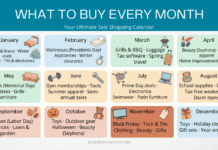
- What to Buy Every Month, The Complete Sale Shopping Calendar For independent buying advice, Consumer Reports shopping guides is an excellent free resource families can rely on.
>
Frequently Asked Questions
TVs, other large electronics, gaming consoles and games, major appliances, small kitchen appliances, bedding and towels, and toys consistently see the deepest and most genuine Black Friday discounts. Clothing, jewelry, and beauty products are less likely to offer Black Friday-specific value.
Online shopping is better for most people on Black Friday. You avoid crowds, can comparison shop instantly, and most major deals are available online. In-store is worth considering only for true doorbuster deals with genuinely limited in-store inventory or for large purchases where you want to see the item before buying.
Some are genuinely excellent; many are manufactured. The key is knowing the regular price of what you want before the sale starts. Use a price tracker like CamelCamelCamel for Amazon items or Google Shopping’s price history for other retailers. Items where the Black Friday price is measurably lower than the 90-day average price are genuine deals. Items at or near their regular price, just described as “Black Friday deals,” aren’t.
Most major retailers now start their Black Friday sales days or even weeks before the actual Friday. “Early Black Friday” deals often have the same or better pricing than the official event. If you see something on your list at a great price in early November, don’t wait for the official date, buy it. The best deal of Black Friday is often the one that came early.
The Bottom Line
Black Friday can save you real money on things you were already going to buy, if you shop with a plan. The shoppers who come out ahead are the ones who made their list before the ads came out, tracked prices so they know a real deal when they see one, set a total budget and stuck to it, and bought with intention rather than excitement. The shoppers who regret Black Friday are the ones who let the event’s energy make purchasing decisions for them. Know what you want, know what it’s worth, and let that be your guide.
Image disclosure: Images in this post are AI-generated and used for illustrative purposes only. They do not depict real people or events. See our full AI disclosure policy.