

Clothing is one of the most negotiable items in a family budget, and one where the gap between what families spend and what they need to spend is often enormous. Between strategic shopping timing, secondhand sources, shopping apps, and thoughtful buying, families can dress well for a fraction of typical retail costs. This guide covers every effective strategy for reducing what your family spends on clothing without sacrificing quality or style. This guide covers everything you need to know about how to save money clothing whole, with practical steps that work for real families.
The Smart Way to Save Money Clothing Whole Every Time
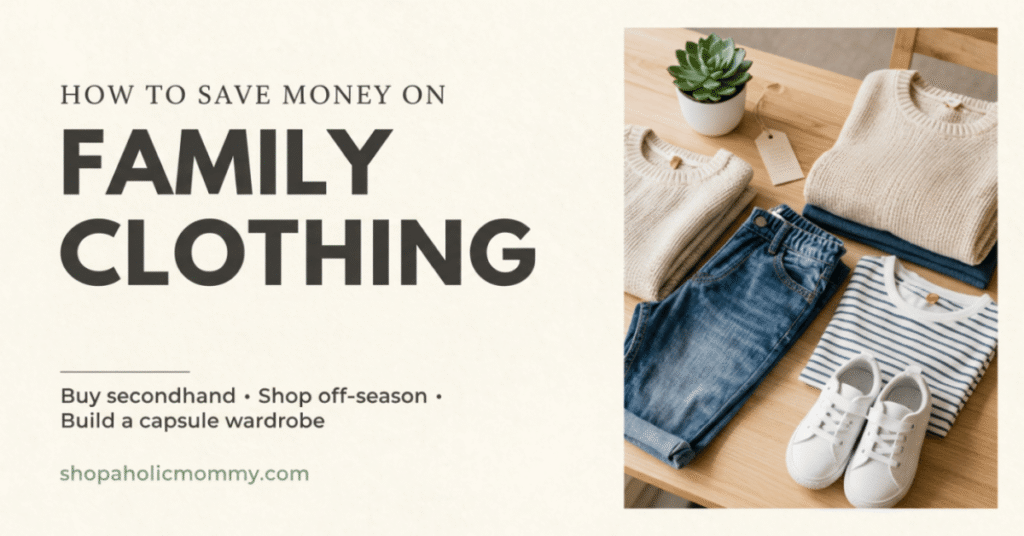
The Biggest Mistake Families Make with Clothing Budgets
The biggest mistake is reactive buying, purchasing clothes when you need them, at whatever price the store is charging at that moment. This is the most expensive way to buy clothing. Strategic buyers do the opposite: they buy clothing before they need it, when it’s on sale, in the sizes they’ll need next season. This single mindset shift, from reactive to planned, can cut a family’s clothing budget in half.
Buy Out of Season
Retailers discount seasonal clothing aggressively to clear inventory and make room for the next season’s merchandise. Winter coats are cheapest in February. Summer swimwear hits 50–70% off in August. Back-to-school clothes go on clearance in October. Holiday dresses are deeply discounted in January. If you can buy one season ahead, planning what your children will need next winter and buying it in February at clearance prices: you’ll pay 40–70% less than in-season shoppers.
For children, buy the next size up at end-of-season clearance sales. A 4T bought in January for a child currently wearing 3T fits perfectly by next fall. The key is keeping a simple spreadsheet of each child’s current size and buying one size up (or one size up in the next season’s direction) during clearance events.
Shop Secondhand First
For children especially, secondhand clothing is the single best value in family apparel. Kids outgrow clothes so fast that most secondhand children’s clothing has barely been worn. Thrift stores, consignment shops, Facebook Marketplace, and online resale platforms (ThredUp, Poshmark, Kidizen) all have abundant children’s clothing in excellent condition at 70–90% below retail prices.
For adults, secondhand shopping is increasingly mainstream and the quality of inventory has improved dramatically. Online platforms let you filter by brand, size, and condition, making it practical to find exactly what you’re looking for. A $180 name-brand dress for $22 on Poshmark is a real outcome, not an outlier.
Best Secondhand Platforms by Category
For children’s clothing: ThredUp (excellent selection, easy to use), Kidizen (focused on kids’ brands), Facebook Marketplace (local pickup, no shipping), and local consignment stores. For adult women’s clothing: Poshmark (largest selection), Depop (more fashion-forward inventory, especially strong for dresses and formalwear; if your daughter is rushing a sorority and needs several dresses at once, Depop is where the deals are), ThredUp (curated bundles). For men’s clothing: eBay (best for basics and workwear), Poshmark, local thrift stores. For baby gear and shoes: Facebook Marketplace and local buy/sell/trade groups offer the best value since items are often nearly new.
Sell What Your Family Outgrows on Depop
Depop deserves a special mention not just as a place to buy, but as a selling platform, and it’s one the kids can actually run themselves. Families who have kids or teens list outgrown clothes, shoes, and things around the house that are no longer being used consistently find it adds up to real money. Several hundred dollars over a summer is a very achievable outcome when kids stay consistent with listing. The one commitment required is being willing to make trips to the post office to purchase and print postage for mailed items, but for motivated kids it becomes an excellent hands-on lesson in entrepreneurship, pricing, and customer service, on top of the actual income it generates.
For more budgeting resources, the Consumer Financial Protection Bureau budgeting tools is an excellent free resource families can rely on.
Frequently Asked Questions
The best time to shop for children’s clothing is at the end of each season, when retailers mark down current inventory to make room for the next season’s arrivals. End-of-summer sales typically offer the deepest discounts on warm-weather clothes, while January sales are the best window for winter coats, boots, and cold-weather gear. Shopping out of season and buying one size up lets you stock up at 40–70% off what other families pay.
Families who consistently shop secondhand for children’s clothing typically save 70–90% compared to buying new at retail prices. Because kids outgrow clothes so quickly, the secondhand market is flooded with barely worn items in great condition. A family with two or three children who prioritizes thrift stores, consignment shops, and online resale platforms can realistically cut their annual clothing budget by several hundred dollars every year — sometimes more.
Yes — with a couple of simple precautions. Before buying, check the CPSC (Consumer Product Safety Commission) recall database to confirm no active recall applies to the item, particularly for sleepwear and items with drawstrings. Wash everything before your child wears it, regardless of how clean it looks. Avoid buying used car seats or safety helmets secondhand, since you can’t verify their history. For clothing, shoes, and accessories, secondhand shopping is both safe and savvy.
Keep a simple running note — even just a note on your phone — with each child’s current size in tops, bottoms, shoes, and outerwear. When shopping end-of-season sales, buy one size up from their current size. For fast-growing toddlers and younger children, sometimes buying two sizes up makes sense. Check the note before any clearance shopping trip so you’re never guessing. Storing off-season purchases together in a labeled bin by size makes it easy to find them when the weather changes.
Most resale platforms require users to be at least 13 years old, and many require a parent or guardian to set up and manage the account for younger teens. Even so, children as young as 10 or 11 can participate in the process with a parent’s help — photographing items, writing descriptions, and packing orders. Older teens can manage their accounts largely independently. Beyond the money earned, the experience teaches practical skills in pricing, customer communication, and basic entrepreneurship that are genuinely valuable at any age.
For more ways to take control of your family finances, see our complete guide to stopping overspending.
Before you shop, check our complete monthly shopping calendar to time your purchases for the lowest prices.
Image disclosure: Images in this post are AI-generated and used for illustrative purposes only. They do not depict real people or events. See our full AI disclosure policy.


