

Teaching Kids to Cook: Easy Foods to Start With
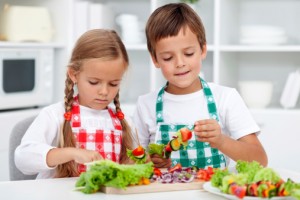

- Start with breakfast foods. At the end of a long day, probably the last thing you want to do is take pains to teach your child how to do things like use the stove or grease a pan. You can teach these basics on a weekend morning by teaching kids to cook breakfast foods. Scrambled eggs are extremely easy. Once he gets the hang of those, show him how to make hard-boiled eggs, and finally fried (though flipping it over takes some practice). Pancakes and French toast are other simple foods that everyone should know how to make before moving out of their parental home.
- Next, work on foods that they will probably rely on when they’re in college. These are typically quick and easy, and make good weekend lunches: grilled cheese, macaroni and cheese, hot dogs, pasta. This will give her a good start, and even if that’s all she learns how to make until later in her teens, she’ll be ahead of the game.
- Finally, start incorporating them in your dinner-making. By now, your child will know how to preheat an oven, how to use some of the different appliances that you own and which pans are appropriate for which types of cooking. Simple dishes to start with include baked chicken, spaghetti sauce, anything that goes in the crock pot, chicken soup, mashed potatoes, rice and various vegetables. As their skills increase, go ahead and raise the complexity of the recipes that you try. He might even want to try some recipes that you’ve never made before!
It will be a joy when your child is able to cook meals for the family, but that will come later. And of course, you’ll need to supervise to keep her safe: Don’t let a child younger than her teens use the stove when you’re not home, and teach her important safety tips like turning the pot handles inward and not reaching over gas burners with draping clothing. Also, be sure that she knows how to use a fire extinguisher and that she knows how to treat a simple burn. Don’t panic if she does burn herself slightly on a hot pan or the oven rack; all of us do it on occasion, and it’s good for her to learn how to handle it.
What are some foods that your kids know how to make? How old were they when they started to learn to cook?


Subscribe
If you enjoyed this article, subscribe to receive more just like it.





my son is only 4 but he likes to help me cook. So does my daughter but they aren’t really old enough to know how to cook themselves but they will get there!
Mine are gonna learn soon (they love to help me with simple things when I’m cooking). We have great times together at the kitchen, is so fun.
My daughter loved to make cookies with me. She can make meatloaf and pasta dishes now…she is turning 25 this year.
My oldest loves to make pancakes and eggs on Saturday mornings. Mommy loves it too. =)
My son is already helping me wash dishes and set the table. Next up, cooking!
Maybe one day when my daughter grows up, i will teach her to cook.
Beside cookies 🙂 they have mastered simple yummy yeast rolls.
Great ideas to keep in mind, my 4 year old is already interested in helping me cook.
interesting post! Is better for them to help mom to cook rather than playing with technology stuff that they hooked to all the day.
Thanks for the tips,my son is only one,so I’ll keep these tips in mind for when he gets older.
I think when I was a kid that the first thing my grandmother taught me to make was a cake. She was always baking and taught me about measuring and cooking terms. From there when I got a little older the first thing I “cooked” was a fried egg with help of course.
Great ideas and education for young peoples
This will boost the self esteem of the kids!!!!
I loved baking with my grandma!
Cooking is a great skill to learn. The sooner the better and it can be a lot of fun!
Great to read about how grandson’s can help me cook
This is great I make my grand kids make meatball and the make they own pizza and the love it.
My husband and I started having the children help us in the kitchen when they were about three. It has since been one of their favorite “chores” to do. We have to give each child two nights a week to be the helper and the last night we get the kitchen to ourselves. Most times, I enjoy the help but I admit that I really like the seventh night! LOL
I bought a safety knife for my son when he was 5. It is does not cut well as it is designed so they can’t cut themselves but he could cut velveeta cheese and other softer things. He loved that. He can make mac and cheese and eggs. He helps me with anything I make for dinner.
Kids should start as early as possible I love that you say make what they will eat in college !!!
These are some really great ideas. My kids love to cook.
I wish my daughter would teach me to cook! I burn water, she’s an excellent cook!
My daughter is four and loves to cook already. Makes me a little nervous that she watches me with the oven and stovetop
Some great ideas! Thanks for sharing
I have three daughters and when they were little I worked outside of the home. My husband worked eight years of swing-shift, so for the most part I was single parent in the evenings. I am almost sad to admit that, the last thing I wanted to do was “teach” the kids to cook after, a day of work, picking up kids at three different places, rushing around, to empty and clean lunch boxes and back packs, check homework, worrying about getting a healthy dinner on the table, baths, prayers and bedtime stories. And then, making things ready for the next morning to do it all over again…. I’m tired just thinking about it! LOL =)
These are smart, healthy tips. I think the first food my daughter was able to cook was scrambled eggs. She’s 13 now, so I need to get her back in the kitchen helping me cook to prepare her for adulthood.
My granddaughter who is 2 loves to help me with everything!! Thanks for the great and safe tips!!
I found that eating what the kids make (even if it is bad!) is a great motivator!
I wish I would have learned the intricate way of cooking like my mom. She mixes the spices and roasts them for our ethnic cousine and it is hard to know when things are “done.”
My grandmother started me cooking standing in a chair. She would never loose her temper with me. I can cook and clean now bc of her. Thanks for the awesome review 🙂
These tips are great. My daughter, now 14, started by learning how to scramble eggs. Now she makes breakfast for the family most weekends. I’m so glad she took the initiative and wanted to learn.
I love to cook with my two kids. Yes, there is a mess after, but making the mess is half the fun and memories.
Great idea. I don’t know what I would’ve done if my mom had never taught me. When I went to college in apartment living my roommate thought that grease was added to the pan to cook hamburger. Wowzer!
What a great way to spend quality time with my grandchildren, as well as teach them early to be independent.
My son started to take an interest in cooking when he was about 12. He makes a mean spaghetti bolognese! He can rock a cheese omelette too!